
Seal and insulate in one step
Spray Foam Insulation in McKinney, TX
The right foam on each surface, at a thickness written on your quote.
- Free estimates at your home, not over the phone
- Quotes that list foam type, depth and R-value for each area
- Open-cell, closed-cell and blown-in, matched to the spot
What Spray Foam Does That Batts Cannot
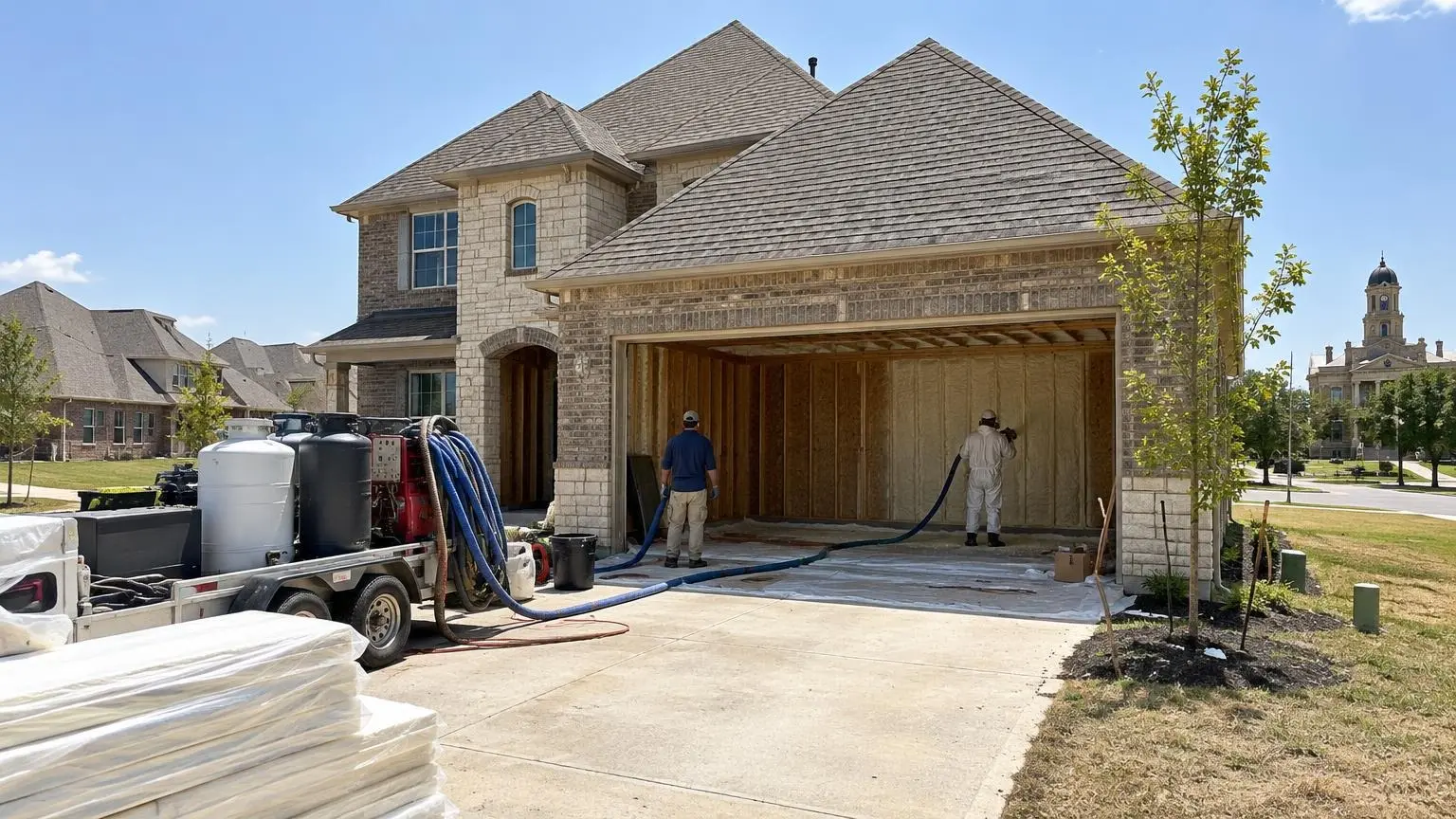
Spray Foam Insulation goes on as a liquid, expands in seconds and bonds to the wood, block or steel it touches. That bond is the point: it insulates and stops air movement at the same time, which loose batts and blown fiber cannot do on their own. In a McKinney house, that matters most on the underside of the roof deck, around bonus rooms and garage ceilings, in the open walls of an addition, and under raised floors. It also matters in steel shops, where foam stops condensation on cold metal.
Open cell
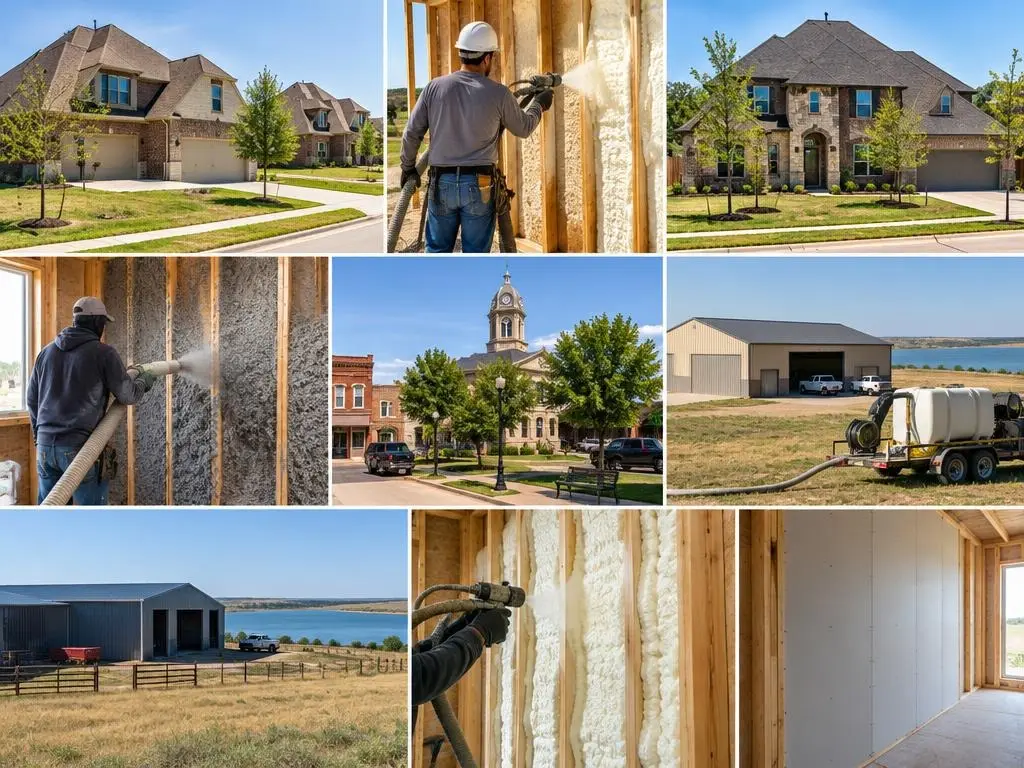
Open-cell foam is soft and light, rated by HomeGuide at R-3.5 to R-3.7 per inch. It expands a great deal, fills odd-shaped rafter bays and costs less per inch, so it is the usual pick when we move the insulation line up to the roof deck. It also deadens sound in interior walls and floors. It lets some water vapor pass, so it is not what we put where moisture is the main concern.
Closed cell
Closed-cell foam is rigid and heavy, R-5 to R-7 per inch in HomeGuide's figures, and at normal thickness it acts as a vapor retarder and shrugs off incidental water. It packs more R-value into shallow framing, stiffens the surface it is sprayed on, and sticks to metal. We use it on garage ceilings below bonus rooms, under raised floors, on rim areas and on steel buildings.
When foam is the wrong answer
Foam is not automatically the upgrade. If your attic is vented, the ducts are short, and the trouble is mainly thin or uneven insulation, sealing the ceiling and blowing in more loose-fill can deliver most of the comfort for a fraction of the price. We tell you that when it is true, and we price both.
Before we spray
We look for roof leaks, soft decking, disconnected ducts and gas appliances that draw combustion air from the attic. Those get dealt with before foam goes on, not after. McKinney's residential inspection paperwork includes a spray foam letter about the ignition barrier, so we also plan where exposed foam needs a coating or covering.
Where We Spray
Each area gets its own line on the quote, with foam type and thickness.
Roof deck (sealed attic)
Open-cell foam under the deck and on the gable walls, with attic vents closed, so the air handler and ducts sit inside the insulated space.
Walls in additions and remodels
Open or closed cell in exposed stud bays before the drywall goes up, including rooms added over garages.
Garage ceilings and bonus room floors
Closed-cell foam where a living space sits over an unconditioned garage and depth is limited.
Under raised floors
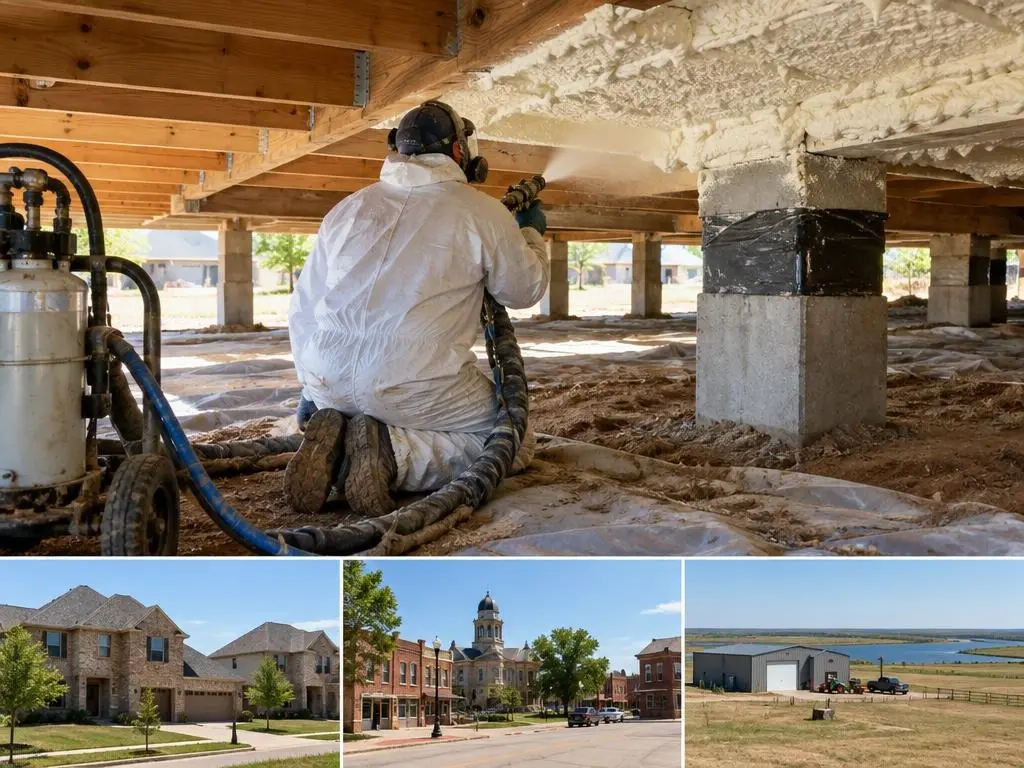
Closed-cell foam on the underside of a pier-and-beam floor, sealing around plumbing and wiring.
Steel buildings and shops
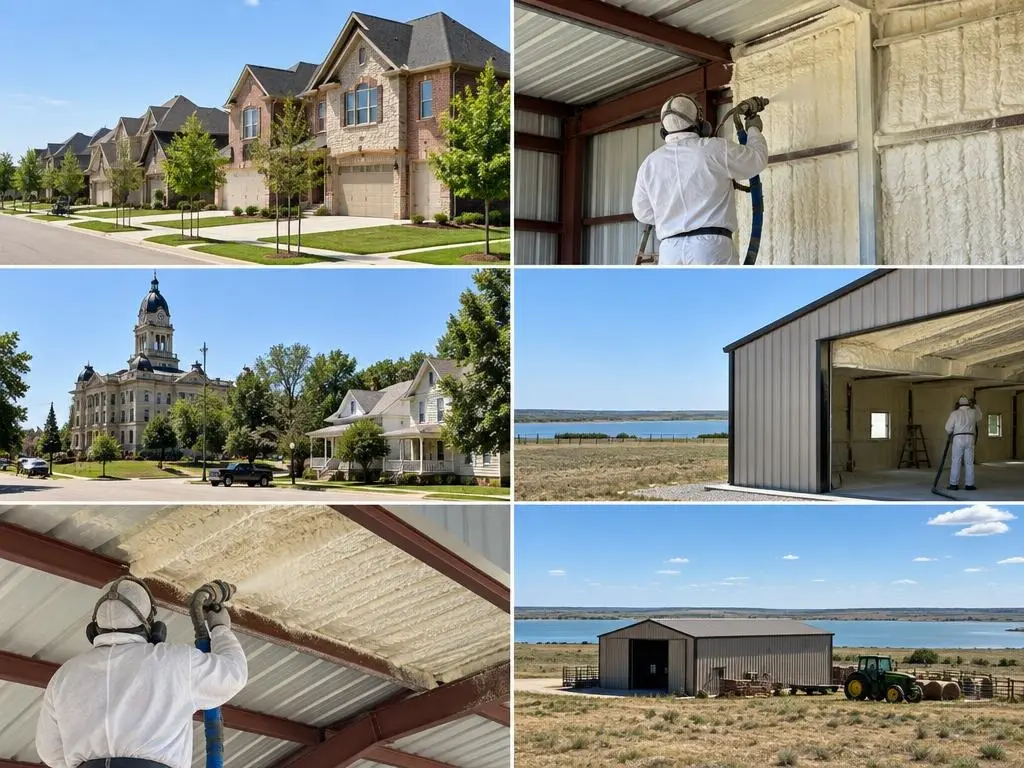
Closed-cell foam on metal walls and roofs to cut heat gain and stop condensation.
Published Spray Foam Insulation Costs
| Job | Range and source |
|---|---|
| Spray foam, installed | $1.50 to $5.00 per sq ft (HomeGuide) |
| Open-cell / closed-cell | $1.50 to $3.50 / $3.00 to $5.00 per sq ft (HomeGuide) |
| About 1,000 sq ft | $1,500 to $5,000 (HomeGuide); $3,150 to $7,500 existing home (Fixr) |
| Existing walls / new construction | $3.15 to $7.50 / $2.75 to $6.50 per sq ft (Fixr) |
| All exterior walls | $4,000 to $10,000 (HomeGuide) |
| Whole house | $8,000 to $20,000 (HomeGuide); $10,000 to $30,000 (Fixr) |
| Typical job minimum | $1,000 to $2,000+ (HomeGuide) |
National ranges from HomeGuide's 2026 guide and Fixr's 2025 guide. Foam type, inches, roof shape, access and prep work push a job up or down, and small jobs often hit a minimum. We quote after seeing the house, and that written figure is the price you pay.
How a Foam Job Runs
1. Walk-through
We check the attic, roof deck, ducts, equipment and any open framing, and talk through what bothers you about the house.
2. Written quote
Each surface is listed with foam type, thickness, R-value and price, plus any cheaper alternative worth considering.
3. Prep
Rooms below are covered, equipment is masked, and the spray area is closed off and ventilated.
4. Spray
Foam goes on in passes to the specified depth; we spot-check thickness as we go.
5. Finish
Ignition or thermal barrier where needed, cleanup, and a walk-through with you before we leave.
Why Choose Us for Spray Foam Insulation
Thickness on paper
The quote says how many inches go on each surface, so you can compare it with any other bid.
Problems first
Leaks, soft decking and appliance venting are flagged before anything is sprayed.
Foam only where it pays
We will point out spots where blown-in or sealing alone is the better value.
Spray Foam Insulation Questions
What is the difference between closed cell and open cell?
Open-cell is lighter, cheaper and better at filling irregular spaces, at about R-3.5 to R-3.7 per inch. Closed-cell is dense, R-5 to R-7 per inch, and slows vapor. We use each where its strengths matter.
How thick should spray foam be on a roof deck?
It depends on the foam and the R-value target for the house. The quote lists the planned inches and resulting R-value for each area so nothing is left vague.
Does spray foam need to be covered?
Exposed foam generally needs an ignition or thermal barrier unless the product is tested for that use. McKinney's inspection paperwork includes a spray foam letter covering this, and we plan for it up front.
How long until we can come back inside?
HomeGuide's guidance is to stay out at least 24 hours while foam cures. We schedule the job around that and let you know when the house is ready.
Spray Foam Insulation Service Areas
- Spray Foam Insulation in McKinney, TX
- Spray Foam Insulation in Allen, TX
- Spray Foam Insulation in Fairview, TX
- Spray Foam Insulation in Lucas, TX
- Spray Foam Insulation in Parker, TX
- Spray Foam Insulation in Melissa, TX
- Spray Foam Insulation in Princeton, TX
- Spray Foam Insulation in Wylie, TX
- Spray Foam Insulation in Murphy, TX
- Spray Foam Insulation in Sachse, TX
- Spray Foam Insulation in Lavon, TX
- Spray Foam Insulation in Farmersville, TX
- Spray Foam Insulation in Plano, TX
- Spray Foam Insulation in Van Alstyne, TX
Get a Spray Foam Insulation Estimate
Find out which foam fits each part of your house.